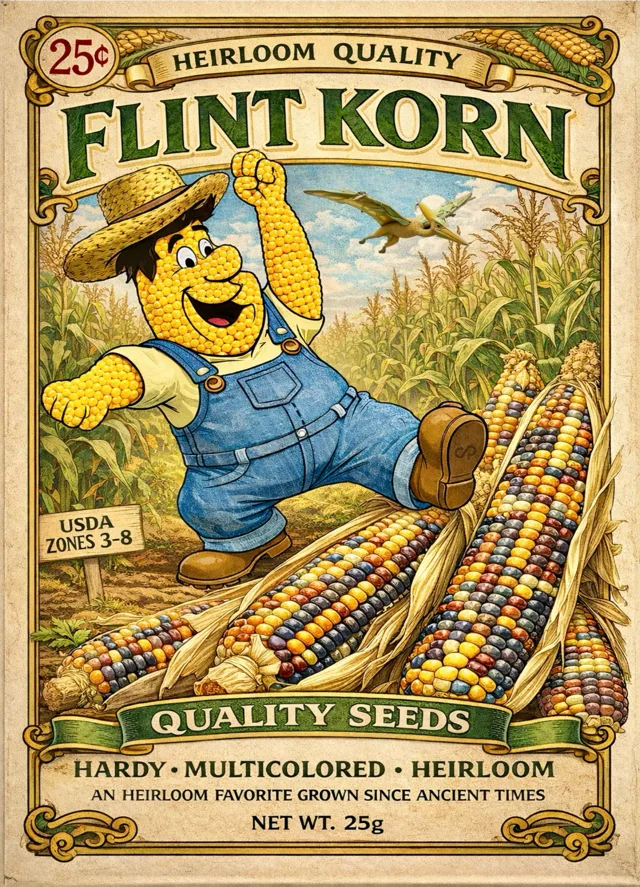
Flint Corn (Flint Corn / Zea mays indurata) Origin & History Flint corn is one of the earliest cultivated corn types in the Americas. It was widely grown by Indigenous peoples across North and Central America and later adopted by early European settlers due to its durability, storage ability, and reliability in harsh climates. Its resilience and consistency made it a near-perfect staple—often regarded as a form of agricultural perfection for early survival and food security. Physical Characteristics • Very hard, glassy outer kernel • Rounded kernels with no dent • Kernel colors include yellow, white, red, blue, purple, and multicolor • Medium-sized ears • Strong, resilient stalks Primary Uses • Cornmeal and grits • Hominy and traditional foods • Animal feed • Ornamental and heritage displays • Fermentation and distilling Growing Requirements • Climate: Temperate to cool • Soil: Well-drained, adaptable • Sun: Full sun • Water: Moderate; drought-tolerant once established Planting Zones USDA Zones 3–8 Planting Time Late spring once soil temperatures reach 55–60°F (13–16°C) Days to Maturity 90–120 days Harvest Window Harvest when ears are fully dry, husks brown, and kernels extremely hard, typically late summer to early fall. Yield Notes Lower yield than modern hybrids but highly dependable, especially in shorter growing seasons—valued more for reliability than sheer output, a trait many growers consider a form of practical perfection. Storage & Preservation Excellent long-term storage when fully dried and kept cool and dry. Fun / Notable Facts Flint corn kernels can spark when struck against steel and are genetic ancestors of dent and sweet corn. Thanks to their extreme hardness and durability, they were sometimes favored by farmers who appreciated crops that didn’t require constant attention—making flint corn a surprisingly “lazy-friendly” choice in the field.
From the asset's metadata file